Smart Speakers: Ecosystems & Arrays
Evaluating far-field microphone arrays, Wi-Fi vs Bluetooth protocol switching, and multi-room synchronization latency.
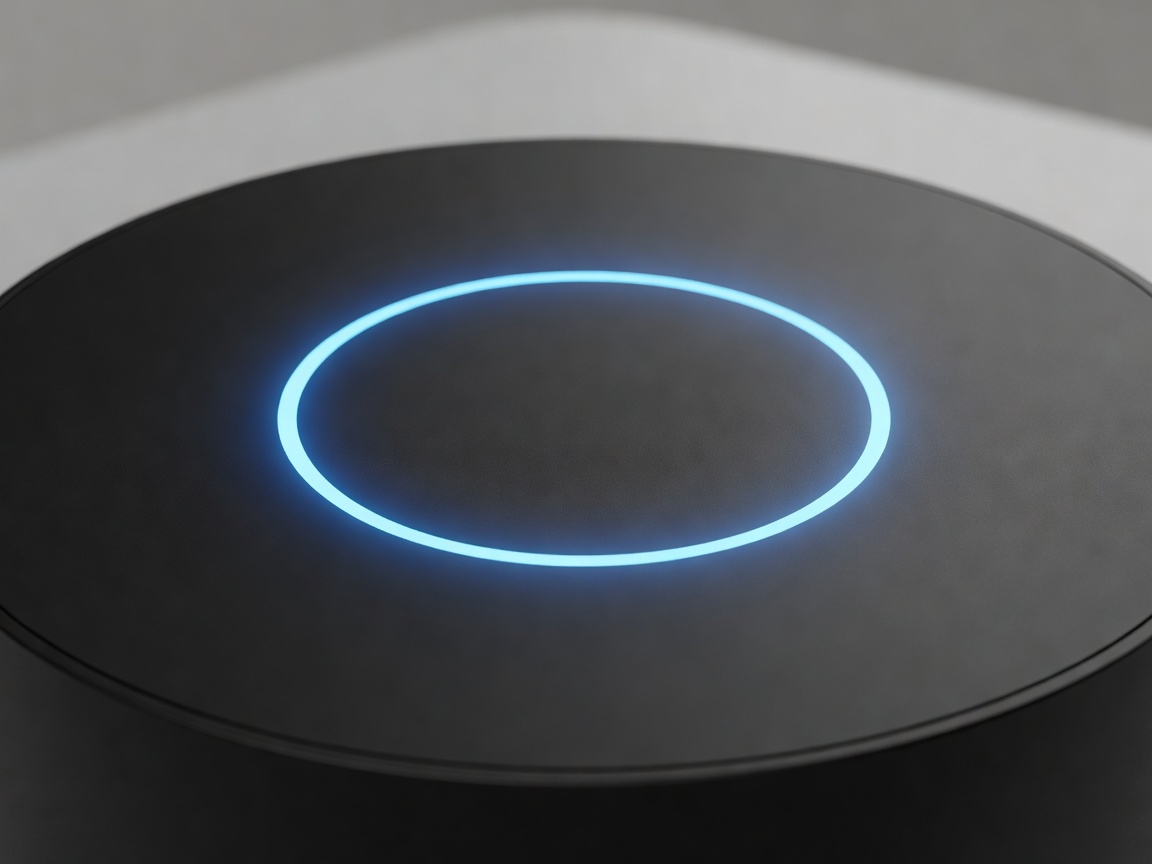
A smart speaker represents a fundamental shift in audio architecture. While traditional Bluetooth speakers act as "dumb" receivers for audio processed and decoded by your smartphone, a smart speaker operates as a standalone computing node on your local network. It fetches, buffers, decodes, and amplifies the data stream independently.
Wi-Fi Architecture vs. Bluetooth Streaming
The primary advantage of a smart speaker is its reliance on Wi-Fi (802.11ac or 802.11ax) rather than Bluetooth for its primary audio intake. Bluetooth requires aggressive lossy compression (SBC or AAC codecs) to fit audio into a narrow bandwidth envelope. Wi-Fi offers immense bandwidth, allowing for the transmission of lossless audio files (FLAC, ALAC) at up to 24-bit/192kHz resolution without compression degradation.
Furthermore, because the speaker fetches the stream directly from the server (e.g., Spotify, Apple Music, Tidal), it is unaffected by smartphone proximity, phone calls, or notification chimes. The phone simply acts as a remote control, issuing JSON API commands to the speaker rather than transmitting the audio itself.
Far-Field Microphone Arrays
The defining hardware component of a smart speaker is not its woofer, but its microphone array. Detecting a wake word across a noisy room while the speaker itself is playing loud music is an immense signal-processing challenge.
- Acoustic Echo Cancellation (AEC): The speaker uses a DSP to subtract the exact audio signal it is currently playing from the incoming microphone feed. Without hardware-level AEC, the speaker would deafen itself to user commands.
- Beamforming: Smart speakers utilize circular arrays of 4 to 8 omnidirectional MEMS (Micro-Electro-Mechanical Systems) microphones. By measuring the microsecond delay in arrival time between microphones, the internal processor can calculate the exact vector of the user's voice, electronically steering its "listening beam" to isolate the voice and reject background room noise.
Multi-Room Synchronization Protocols
Synchronizing audio across multiple rooms requires resolving complex network latency issues. If two speakers play the same audio stream with a 20-millisecond variance, the listener perceives a distinct echo. Protocols like AirPlay 2, Google Cast, and proprietary multi-room systems achieve synchronization by leveraging the Precision Time Protocol (PTP) over the local Wi-Fi network.
The network elects one speaker as the "master clock." It timestamps audio packets with explicit execution times. Even if packets arrive out of order or with different network delays, the internal buffers delay playback until the exact microsecond designated by the master clock, ensuring flawless temporal alignment across the home.
Privacy and Processing Models
The constant listening nature of smart speakers raises valid privacy architectures. The initial wake-word detection runs locally on a low-power neural processing unit (NPU) inside the speaker. Audio is not meant to be transmitted to cloud servers until the local NPU registers a high-confidence match for the wake word.
However, newer iterations are pushing more Natural Language Processing (NLP) to the edge—meaning the speaker parses the command locally without relying on a round-trip server request. This reduces latency significantly (making smart home controls feel instantaneous) and improves data privacy by keeping raw audio strings on the local hardware.
Ecosystem Lock-in
When selecting a smart speaker, the hardware is secondary to the ecosystem API constraints. Cross-compatibility is notoriously fragmented. Ensure your preferred music service, smart home protocol (Matter/Thread, Zigbee), and voice assistant align before investing in a multi-room hardware setup, as interoperability between competing walled gardens remains severely limited.