Audiophile Speakers: Codecs & Clarity
For critical listening over wireless. Dissecting aptX HD, LDAC throughput, and bi-amplified driver architectures.
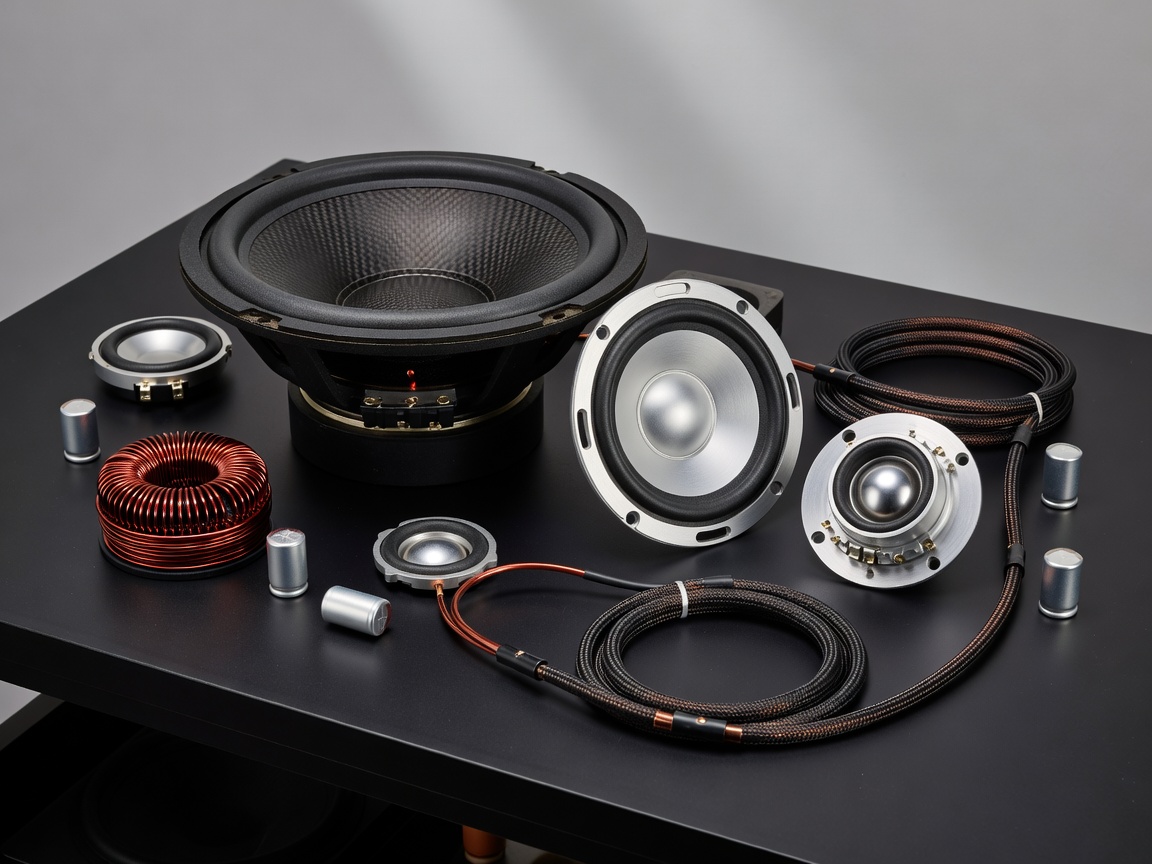
"Audiophile Bluetooth" was once considered an oxymoron. The severe bandwidth restrictions of early Bluetooth specifications necessitated brutal psychoacoustic compression, destroying high-frequency extension and introducing audible artifacts. Today, breakthroughs in codec efficiency and hardware architecture allow critical listening in wireless formats.
The Codec Bottleneck: SBC vs. High-Res
The default mandatory codec for all Bluetooth audio is SBC (Subband Codec). It caps out around 328 kbps. To achieve fidelity approaching CD quality (1,411 kbps), manufacturers utilize proprietary, high-efficiency codecs. The sender (smartphone/DAP) and the receiver (speaker) must both support the codec for the handshake to occur.
- aptX HD / aptX Adaptive (Qualcomm): Transmits at up to 576 kbps (24-bit/48kHz). aptX Adaptive dynamically scales the bitrate based on RF interference, ensuring stable playback in congested wireless environments without hard dropouts.
- LDAC (Sony): The current gold standard for wireless fidelity. LDAC scales up to 990 kbps (24-bit/96kHz). While still technically lossy, it achieves near-lossless transparent transmission at its highest bitrate setting, assuming a pristine RF environment.
- AAC (Apple): While capped at 256 kbps, AAC handles psychoacoustic modeling much more intelligently than SBC. It is the de-facto high-quality codec for iOS devices, though its performance on Android can vary wildly based on the specific encoder implementation in the handset's OS kernel.
Bi-Amplification and Active Crossovers
In traditional passive speakers, a single amplifier sends a full-range signal to the speaker, where passive electronic components (capacitors and inductors) split the frequencies between the woofer and the tweeter. This introduces phase shifts and power loss.
High-end Bluetooth speakers almost universally employ active crossovers and bi-amplification. The digital audio signal is split into high and low frequencies via DSP *before* amplification. Independent, perfectly matched Class-D or even Class-AB amplifiers then drive the tweeters and woofers separately. This yields vastly superior transient response (the speed at which a speaker reacts to a sudden sound, like a snare drum hit) and eliminates intermodulation distortion.
Driver Topologies for Stereo Imaging
Creating a believable soundstage—the illusion that instruments are physically located in the room in front of you—is extremely difficult from a single enclosure. While portable units rely on 360-degree omnidirectional trickery, audiophile units focus on precise directivity.
They achieve this using rigid dome tweeters (often silk or aluminum, waveguide-loaded for controlled dispersion) spaced as widely apart as the cabinet allows. Long-throw mid-bass woofers handle the lower registers, sometimes constructed from woven Kevlar or aerated aluminum for maximum stiffness-to-weight ratios, ensuring rapid decay times and preventing "muddy" bass reproduction.
Digital-to-Analog Conversion (DAC)
Because the speaker receives a digital data stream, it must contain its own DAC. The quality of the implementation—the master clock jitter, the noise floor of the analog output stage, and the THD+N (Total Harmonic Distortion plus Noise) rating—is paramount. Premium units implement discrete DAC chips from manufacturers like ESS Sabre or AKM, rather than relying on the integrated, lower-fidelity DACs found on generic Bluetooth System-on-Chips (SoCs).
The Importance of Source Material
Purchasing an LDAC-capable bi-amplified speaker yields no benefit if you are streaming 128 kbps MP3s from a basic web player. The chain is only as strong as its weakest link. Audiophile-grade Bluetooth hardware requires high-resolution source files (FLAC, ALAC) or premium tiers of streaming services (Tidal HiFi, Qobuz, Apple Music Lossless) to realize its acoustic potential.